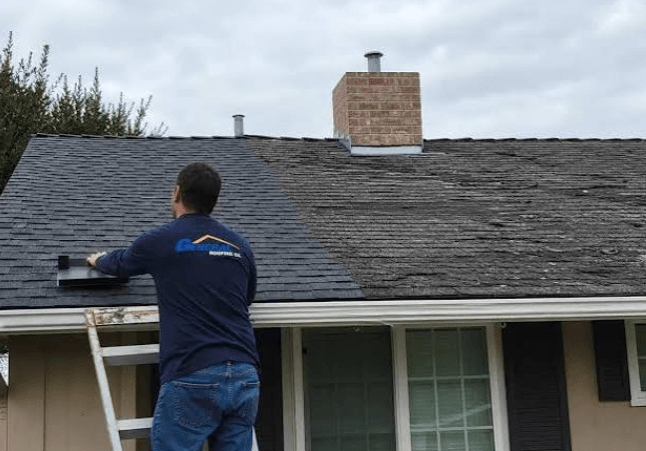
The cheapest bid on the table is almost never the cheapest roof you end up paying for. That reads backwards, especially to a family who just closed on their first house in this country and is holding two estimates that disagree by the price of a used car. One contractor wants to patch and reflash a few problem areas; the other wants the whole thing stripped down to the wood. The home inspection said two to five years of serviceable life left, which sounds reassuring until you learn it is a guess about shingles, not a promise about the deck underneath. So the real question behind every roof replacement blue bell pa estimate is not who is cheaper, it is who is pricing the same job. Once a roof has genuinely reached the end of its service life, a full tear-off costs less over the following decade than the string of repairs that keep postponing it.
Two Quotes Nine Thousand Dollars Apart
Take a 1998 colonial in Blue Bell, roughly 28 squares of roof, two dormers, and a chimney that was flashed badly once already. One bid came in at $14,000. The other, $23,000. Read them side by side and the gap stops being mysterious: the cheap one prices a single layer of architectural shingles laid over the existing surface with the old flashing reused, no ventilation work, and a vague line about replacing rotten plywood at $95 a sheet if needed. The expensive one covers a full tear-off to the deck, an allowance for six sheets of plywood, ice and water shield in the valleys and along the eaves, new step flashing at every wall, a ridge vent cut in, the dumpster, the permit, and a manufacturer-backed warranty that only exists because the installer is certified to register it. What we usually find on jobs like this one is that the two crews are not competing at all. They are quoting different roofs.
Two bids for a roof replacement blue bell pa crews would call routine can sit $9,000 apart and both be written in good faith. The fix is boring and it works: make each contractor put the scope on paper in the same order, line by line, then compare rows instead of totals. Ask what happens when the deck comes up soft, in dollars per sheet, before anyone is standing on your house with a pry bar. A number you agree on in advance stops being a surprise in week two.


The Checks That Separate Repair From Replacement
The deck under the shingles tells the truth, and nobody can read it from the driveway. Age matters, sure. A three-tab roof installed in 1998 has outlived its rating, while a 2011 architectural shingle probably has not. But the checks that actually decide repair against replacement happen in two unglamorous places, the attic and the gutters. Granules collecting in the downspout mean the shingle mat is exposed, daylight around a chimney or a stain trail down a rafter means water has been getting in for a while, and soft spots underfoot mean the plywood is already gone. Ventilation belongs on that same list, because an attic with no intake at the soffits runs hot and cuts years off a brand new roof.
Storm damage is its own category, and it gets claimed loosely by people knocking on doors after a bad afternoon. Before you accept anyone’s hail story, look up your zip code and the date in NOAA’s Storm Events Database, which is free and open to the public. Here is the part I cannot give you a number for: how many roofs that get the two to five years remaining line actually get replaced inside that window. Nobody tracks it that I can find, and anyone who tells you they know is guessing along with the rest of us. What I can tell you is that the owners who wait longest tend to pay for drywall and insulation on top of the roof.
Questions First Time Owners Ask About Replacement
Insurance is the first question almost every new owner asks, and the honest answer starts with how ordinary this all is. As of June 2026, the Insurance Information Institute reported that about one in every 35 insured homes files a property damage claim for wind or hail in a given year, with average hail claim severity running $13,511. Policy language varies by carrier and by state, so what a neighbor got paid tells you very little about your own coverage. Read the declarations page and ask your agent directly.
Will Insurance Cover A Roof That Is Simply Old?
Usually not, and that catches people off guard. Most homeowner policies pay for sudden accidental damage rather than shingles that wore out on schedule, and some carriers settle an older roof at depreciated value instead of replacement cost. Terms differ by state and by policy, so confirm yours in writing before you build a budget around a claim.
How Long Does A Tear Off Take On A House This Size?
On a 28 square colonial with decent driveway access, a full crew strips and dries in the same day, then finishes the following one. Rain, a steep pitch, and rotten decking all stretch that out. The part first time owners underestimate is the noise and the debris, so plan around a dumpster in the driveway and a magnet sweep of the lawn at the end.
See also: Hardware Innovation Startingblockonline: Transforming Technology
Is Layering New Shingles Over Old Ever Worth It?
Sometimes, on a roof carrying one layer over a sound deck, owned by a seller who is moving in six months. For a family staying put, a layover hides the deck at the exact moment you most need to see it, and the trapped heat shortens the life of the new shingles. Manufacturers also limit warranty coverage on layovers, which is worth asking about in writing before anything gets signed.
So price the tear-off honestly, then set it against the patch, plus the next patch, plus the ceiling repair you have not had yet. On a roof that is genuinely finished, the arithmetic lands in the same place almost every time. Get the scope in writing, get the ventilation corrected while the deck is open, and get a warranty somebody is certified to stand behind. A first house is a hundred decisions at once, and this is one of the few where spending more up front is the frugal move.