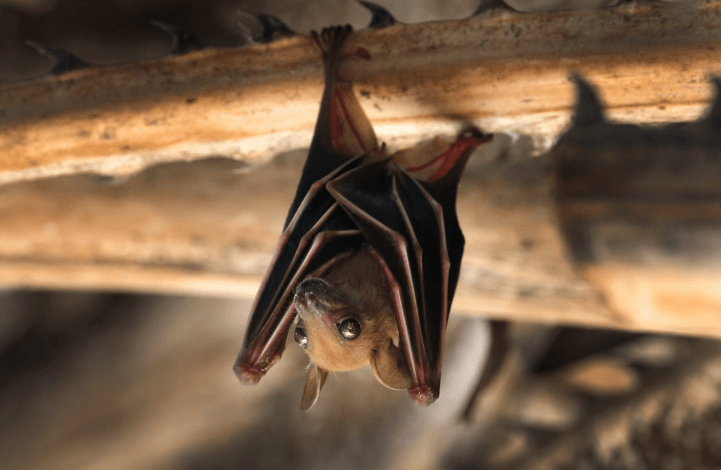
The video came in at 9:12 on a July night, shot from the driveway of a 1960s brick ranch in Plymouth, and it showed three bats dropping out from under the soffit while a fourth flew back inside through an open slider. The tenants were rattled. The owner was 1,900 miles away in Arizona, which is how a lot of these calls start now, and the short version is that a licensed wildlife removal plymouth mi crew ends a colony like that in one sequence of work while a ladder and a can of spray foam usually makes it worse. Bats do not answer to traps or ultrasonic gadgets. They answer to being shut out of a roost they have used for years, and only after the last pup can fly on its own.
Dusk Sightings Point To A Roost Overhead
Sightings inside the house are the last symptom, not the first. The first is a dusk emergence, and you can count it from a lawn chair 20 minutes before sunset with a flashlight you never switch on. On that ranch we counted 31 exits in eleven minutes, all of them out of a four foot run of vented soffit above the northeast corner of the garage. A colony that has summered under the same soffit for six years is not going to take the hint from a strobe light or a bowl of mothballs. Thirty one bats also tells you the second thing that matters, which is that you are looking at a maternity colony rather than one lost animal that wandered in.
Guano Trails Mark The Real Entry Gaps
Guano is the map. It stacks below the entry point, streaks the brick under the fascia, and collects in the attic insulation directly beneath the roost. What usually turns up is not one dramatic hole but a 3/8 inch gap where the soffit meets the fascia board, plus a lifted shingle course at the ridge and a gable vent screen that rusted through years ago. A bat needs about half an inch. The inspection on that job listed nine openings and exactly one of them was visible from the ground, which is why an owner 1,900 miles out cannot triage this from a tenant’s photo.
One Way Doors Work Where Traps Fail
Trapping a bat colony does not work, and it is not what a licensed operator reaches for anyway. The sequence is exclusion. Every opening except the active ones gets sealed first with backer rod, galvanized mesh, and sealant rated for a roofline that moves with the seasons. Then one way devices go over the active gaps, so a bat leaves at dusk, hunts, comes home, and finds the door closed behind it. The devices stay up about a week, the crew returns, pulls them, and seals those last openings. Guano gets vacuumed out, the roost surfaces get sanitized, and the odor that draws the next colony gets treated, because scent is what turns an ordinary soffit into a landmark for the following generation. Skip the sanitizing and you have bought a two year reprieve at best.
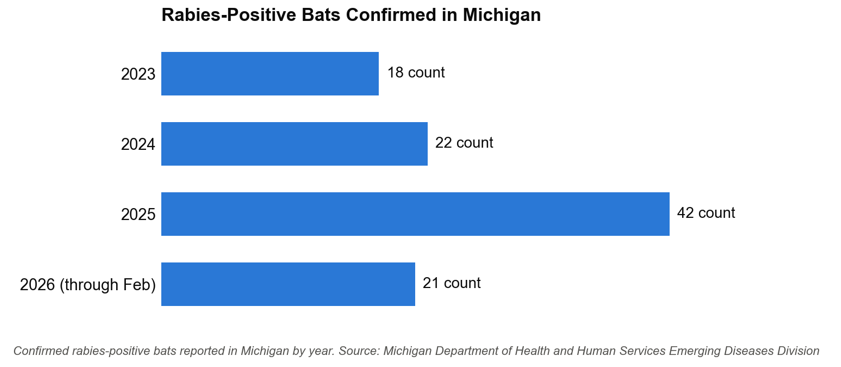
Handling is the part remote owners underestimate. Anyone who wakes up with a bat in the bedroom, or finds one in a room with a small child, a sleeping adult, or a pet, should not shoo it out the window and should call a doctor or the county health department the same day. The National Park Service advises treating a bat found in a room with a sleeping person as a potential rabies exposure that requires medical evaluation, because a bat bite can be small enough to go unnoticed. That is also why catching or relocating bats yourself is not a homeowner job, and it is the reason wildlife removal plymouth mi work gets priced as a sequence instead of a single service call. State health officials track which submitted bats test positive, and that count is worth a landlord’s attention before anyone decides this is only a roof repair.
Timing Questions Landlords Ask About Pup Season
Timing is where remote owners get stuck, and reasonably so. Flightless pups sit in the roost through a good stretch of the summer, and sealing a colony in during that window is the one mistake that turns a wildlife problem into a wall repair. A landlord two towns over foamed his own soffit gaps in the middle of June and thought he had won. Ten days later the pups that could not fly died inside the wall cavity, and he paid for drywall, deodorizing, and the exclusion he had tried to avoid. Michigan protects bats, so the honest answer on exact dates is to ask the state wildlife agency or a licensed operator what the current rules allow, rather than trusting a date somebody posted on a forum.
Adding Up One Exclusion Invoice
Owners want the number before they want the method. Call these figures illustrative, drawn from that one ranch, and swap in your own footage. Sealing 62 linear feet of soffit and fascia at roughly $18 a foot comes to $1,116, four one way devices at $95 each adds $380, guano removal and sanitizing across a 900 square foot attic ran $560, and the return trip to pull the devices and close the last openings was $340, so the invoice landed right around $2,400 all in. Against that, a tear out and replace on contaminated attic insulation in a house that size is easily north of $3,000 by itself, and that assumes no tenant asks to break a lease over it. The exclusion also carried a warranty measured in years, which matters more to an absentee owner than it does to anyone sleeping under that roof.
See also: Hardware Innovation Startingblockonline: Transforming Technology
Sealing The Roofline Ends The Yearly Return
The colony did not come back the following June, and that is the entire point of doing the work in order. According to a Harris Poll conducted for the National Pest Management Association and released in April 2026, 52% of U.S. homeowners used a licensed pest control professional in the past year, which leaves close to half of them handling things alone while rodents invade millions of homes every winter. For a protected species roosting on a rental you cannot walk through on a Saturday, that do it yourself half is where the expensive stories come from. Seal the roofline properly once, sanitize what the colony left behind, keep the warranty paperwork filed with the lease, and the July videos stop arriving.